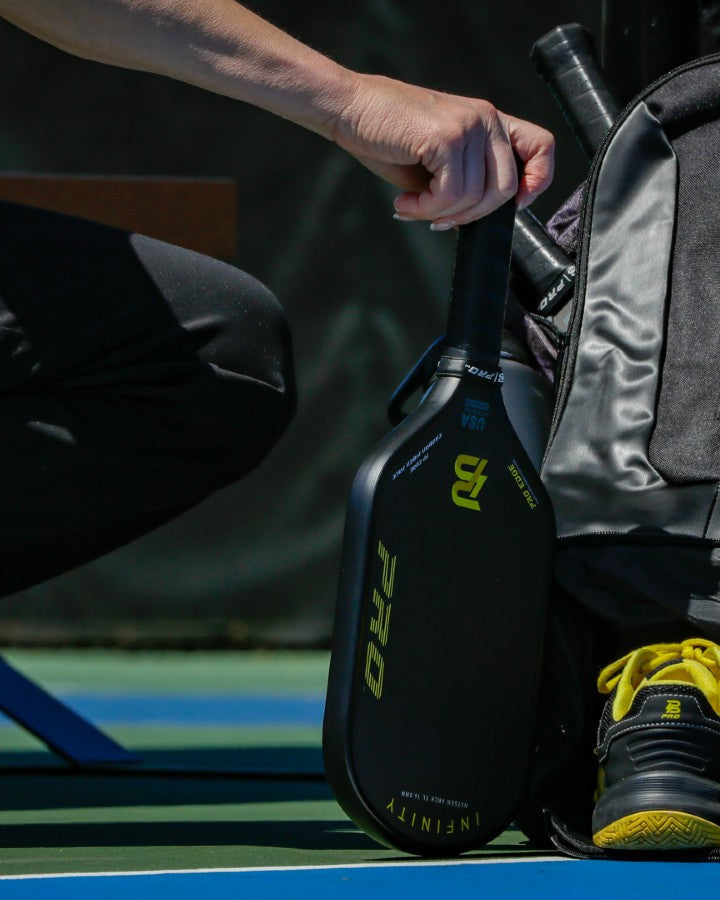

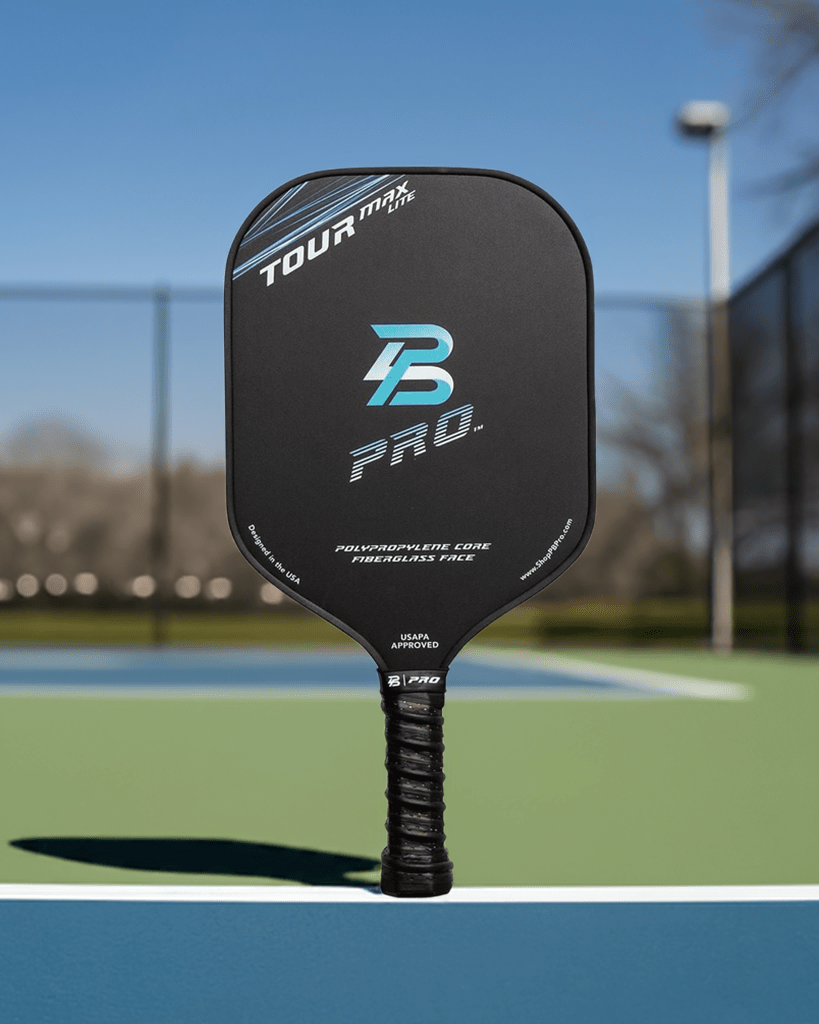

Choosing the right pickleball paddle can make a big difference in how you play and enjoy the game. With so many options available—from beginner-friendly paddles to advanced performance models—it’s important to understand what features matter most.
In this guide, we’ll walk through the key factors to consider when selecting a paddle, including player skill level, paddle construction, and the latest technology generations. Whether you're just getting started or looking to upgrade your equipment, this overview will help you find a paddle that fits your game.
Table of Contents
-
Understanding the Player Progression Model
-
Beginner Paddles: Control and Consistency
-
Advanced Beginner Paddles: Balanced Performance
-
Intermediate Paddles: Spin and Speed
-
Advanced / Pro Paddles: Specialized Performance
-
Pickleball Paddle Technology: Generations Explained
-
Gen 1 Paddles
-
Gen 2 Paddles
-
Gen 3 Paddles
-
Gen 4 Paddles
-
Gen 5 Paddles
-
-
Quick Paddle Guide by Player Level
-
Common Pickleball Paddle Buying Mistakes
-
Frequently Asked Questions
The Progression Concept
Think of pickleball paddles as tools that evolve with your game.
Beginner → Control
Focus on touch, placement, and consistency.
Advanced Beginner → Balanced
Begin adding pace and confidence.
Intermediate → Performance
Introduce more spin, speed, and aggressive play.
Advanced / Pro → Specialized
Choose a paddle that fits your style — power, defensive, or all-around. At this stage, equipment fine-tunes your strengths.
Let's dive in...
Beginner (New to the Sport)
If you’re just getting started, look for a carbon fiber pickleball paddle priced between $35 and $45. This type of paddle gives beginners the best balance of control, durability, and feel while learning the game.
Carbon fiber surfaces also provide a slightly textured feel, which helps players start developing spin and better ball control.
Be careful with very cheap paddles around $29. Many of these use fiberglass faces and lower-quality materials, which can feel stiff and make it harder to control the ball. This can lead to frustration for new players who are still developing consistency.
A good beginner paddle should typically have:
-
Carbon fiber surface
-
13mm thickness
-
Semi-rough texture
-
Classic or widebody shape
-
Weight around 8 oz
These characteristics help new players control the ball, build consistency, and enjoy the learning process.
| Brand | Paddle | Surface | Thickness | Weight | Price |
|---|---|---|---|---|---|
| Franklin | X-1000 | Fiberglass | 13mm | ~8 oz | $35 |
| Franklin | Geo | Fiberglass | 13mm | ~8 oz | $30 |
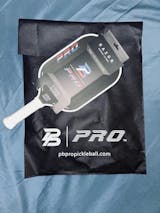
| PBPRO | Signature | Carbon Fiber | 13mm | 8 oz | $42.99 |
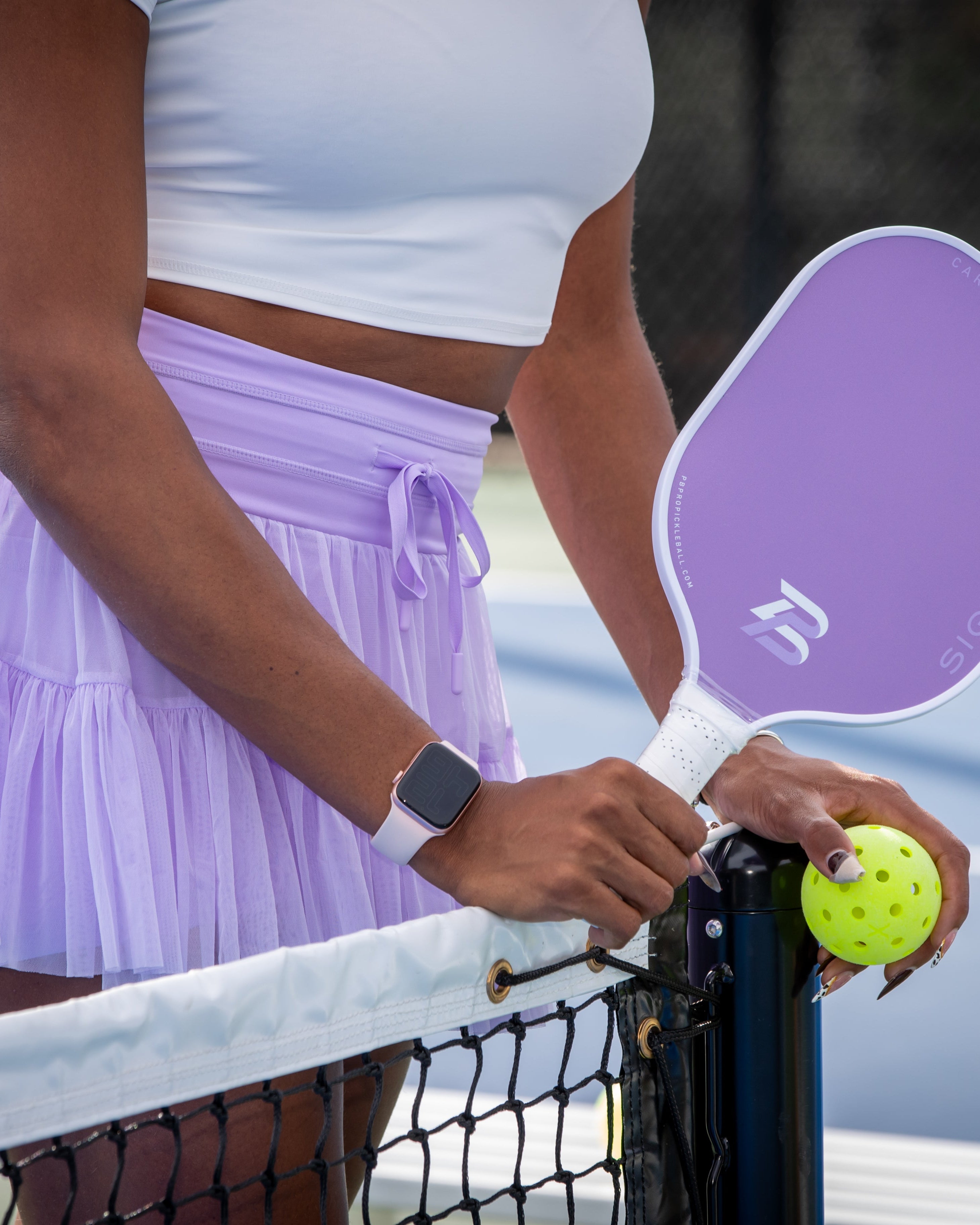
The PBPRO Signature paddle was designed specifically for beginner players.
It also comes in 7 colors, making it fun and approachable for new players entering the game.
This paddle gives beginners a great feel for the ball, helps them start learning spin, and provides the control needed to build confidence on the court.
If you’re just starting out, read our Best Pickleball Paddle for Beginners Guide.

Advanced Beginner (Played for 3–6 Months)
After playing pickleball for a few months, many players reach what I call the Beginner Advanced stage.
At this point you likely have:
-
solid groundstrokes
-
consistent volleys
-
reliable serves and returns
-
the ability to drive the ball
-
the ability to dink and control pace
You understand the game and can play full matches with confidence.
This is the stage where many players benefit from upgrading to a 16mm paddle with a T700 raw carbon fiber surface. These paddles offer more control, better spin, and a softer feel, which helps improve your soft game and consistency.
The good news is you don’t need to spend $150+ yet. Many excellent paddles in the $50–$100 range provide the same materials used in higher-priced models.
| Brand | Paddle | Surface | Thickness | Core | Price |
|---|---|---|---|---|---|
| PBPRO | Signature Plus | T700 Raw Carbon | 16mm | Polypropylene Honeycomb | $54.99 |
| CORE | Reaction Pro | T700 Raw Carbon | 16mm | Polypropylene Honeycomb | ~$99 (often discounted) |
| Vatic Pro | Prism Series | T700 Raw Carbon | 16mm | Polymer Honeycomb | ~$79–$89 |
| Rally | Control Raw Carbon | T700 Raw Carbon | 16mm | Polypropylene Honeycomb | ~$65 |
| Garye | T700 Carbon Paddle | T700 Raw Carbon | 16mm | Polymer Honeycomb | ~$70 |
Example specs of paddles in this category often include 16 mm cores, T700 carbon fiber faces, and weights around 7.8–8.2 oz, providing a large sweet spot and better control for developing players.

Intermediate (Plays weekly)
At the intermediate level, most players move into 16 mm paddles with T700 raw carbon fiber faces and polypropylene (PP) honeycomb cores, which offer better control, spin, and touch.
These paddles typically fall into two construction types:
-
Gen-1 paddles (Cold Press) – softer feel, slower ball speed, excellent control
-
Gen-2 paddles (Thermoformed) – more power, larger sweet spot, more pop
Gen-1 Paddles (Cold Press)
| Brand | Paddle | Surface | Core | Thickness | Price |
|---|---|---|---|---|---|
| PBPRO |
Signature Plus |
T700 Raw Carbon | PP Honeycomb | 16mm | ~$54.99 |
| Vatic Pro | Prism V7 | T700 Raw Carbon | Polymer Honeycomb | 16mm | ~$119 |
| CORE | Reaction Pro | T700 Raw Carbon | Polymer Honeycomb | 16mm | ~$99 |
Gen-1 paddles are ideal for players who want maximum control and consistency while refining their soft game.
Gen-2 Paddles (Thermoformed / Foam Injected Edgeguard)
| Brand | Paddle | Surface | Thickness | Core | Price |
|---|---|---|---|---|---|
| PBPRO | Patriot | T700 Raw Carbon | 13mm | PP Honeycomb | $149 |
| PBPRO | Falcon Lite | T700 Raw Carbon | 16mm | PP Honeycomb | $149 |
| PBPRO | NXTGEN Arch | T700 Raw Carbon | 16mm | PP Honeycomb | $149 |
| Selkirk | Vanguard Control | Raw Carbon | 16mm | Polymer | ~$150 |
| JOOLA | Hyperion CFS | Carbon Friction Surface | 16mm | Polymer | ~$149 |
The Patriot, Falcon Lite, and NXTGEN Arch paddles feature raw carbon fiber surfaces and modern construction designed for improved spin, reach, and stability.
PBPRO Patriot is 13mm and has a bigger sweet spot - it offers controlled power.
Thermoformed paddles wrap the carbon shell around the paddle structure, creating more pop, durability, and a larger sweet spot.
Quick Recommendation
If you are an Intermediate player, start with a Gen-1 paddle for maximum control.
If you are an Improved Intermediate player, moving into a Gen-2 thermoformed paddle can help you generate more power and finishing ability as your game improves.

Advanced Players / Pro Players
Advanced players know exactly what they are doing on the court. These are experienced club players or tournament competitors who have mastered all the fundamental strokes—drives, volleys, dinks, resets, serves, and returns.
Many former tennis players fall into this group. At this level, players have a strong understanding of strategy, can control the speed of the ball extremely well, and can handle almost any shot during a rally.
Because of their experience, advanced players can truly feel the differences between paddles. They also understand their own playing style and what they need more of from their equipment.
Some players want more feel and touch around the kitchen. Others may want more power for aggressive drives and finishing points. Defensive players often prefer paddles with more control, while heavy hitters may lean toward paddles that generate more power.
At this level, paddle technology becomes more advanced.
Gen 3 Paddles: Propulsion Core Technology
Gen 3 paddles introduced propulsion core or floating core technologies designed to increase power and energy return. In these designs, the traditional polypropylene honeycomb core was modified with additional foam layers or suspended core structures to create a more flexible, responsive hitting surface.
This construction produced a lively, powerful feel, often described as a trampoline-like effect when striking the ball. Some paddles also incorporated dual foam injection, adding EVA foam around the perimeter to improve stability and comfort.
While innovative, early Gen 3 paddles faced some challenges. The added flex and complex internal structures occasionally led to durability issues, including core separation or inconsistent feel over time.
These challenges helped drive the development of Gen 4 paddles, which focus on improved structural stability while still delivering high performance.
Gen 4 Paddles: Double-Wall Foam Technology
Gen 4 paddles combine a traditional polypropylene honeycomb core with added foam reinforcement, often called double-wall foam.
This foam is placed along the edges and inside the paddle structure to make the paddle more stable, more durable, and more consistent across the face.
The result is a paddle with a larger sweet spot, excellent spin, and a solid feel, while still delivering strong power and control.
Gen 4 technology helps players get the best balance of performance, stability, and durability, making it one of the most advanced paddle constructions available today.
| Paddle | Surface | Core Construction | Key Features | Price |
|---|---|---|---|---|
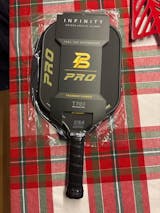
| PBPRO Infinity Gen-X4 Blue | T700 Raw Carbon Fiber | Polypropylene Honeycomb + Double-Wall Foam | Large sweet spot, powerful spin, stable feel | $199 |
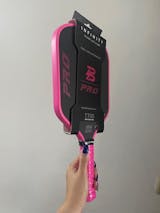
| PBPRO Infinity Gen-X4 Pink | T700 Raw Carbon Fiber | Polypropylene Honeycomb + Double-Wall Foam | Power paddle with excellent spin and durability | $199 |
| Selkirk Labs Project 007 | Raw Carbon Fiber | Polypropylene Core + Foam Perimeter | Strong stability and expanded sweet spot | ~$333 |
| JOOLA Perseus 16mm (Gen 4 style) | Charged Carbon Surface | Polypropylene Core + Foam Edge Reinforcement | Balanced power and control | ~$279 |
| CRBN 3X | T700 Raw Carbon Fiber | Polypropylene Core + Foam Perimeter | Excellent spin and solid feel | ~$230 |
Gen 5 Paddles: Full Foam Core Technology
Gen 5 paddles use a full foam core instead of the traditional polypropylene honeycomb core. The entire paddle interior is made from engineered foam, creating a more uniform structure.
This design provides a very consistent sweet spot, reduced vibration, and a softer, more controlled feel on contact. Full foam cores are also known for improved durability, since they avoid some of the core breakdown issues that can occur with honeycomb structures over time.
Because this technology is still evolving, Gen 5 paddles are often considered next-generation designs, focused on delivering consistent performance and long-term durability for advanced players.
| Brand | Paddle | Surface | Core | Thickness | Price |
|---|---|---|---|---|---|
| CRBN | TruFoam Genesis | T700 Raw Carbon | Full Foam Core | ~14mm | ~$279 |
| CRBN | TruFoam Waves | T700 Raw Carbon | Full Foam Core | ~14mm | ~$279 |
| Proton | Project Peacock | Raw Carbon | Full Foam Core | 13–15mm | ~$280 |
| Proton | Project Flamingo | Raw Carbon | Foam Core | 15mm | ~$280 |
| Gearbox | GX2 Power Hybrid | 3K Raw Carbon | Carbon + Foam Core | 16mm | ~$279 |
| Paddletek | Reserve Honeyfoam | Carbon Fiber | Multi-Foam Core | 14–16mm | ~$249 |
Pickleball Paddle Technology: Generations Explained
As pickleball has grown, paddle technology has evolved quickly. Manufacturers have introduced new materials and construction methods to improve power, spin, control, and durability.
This chart provides a quick overview of how paddle technology has progressed, helping players understand the key differences between each generation and choose the paddle that best fits their game.

Quick Pickleball Paddle Guide by Player Level
If you're not sure which paddle is right for you, this quick guide summarizes the recommendations based on your experience level.
| Player Level | Experience | Recommended Paddle | Technology | Price Range |
|---|---|---|---|---|
| Beginner | New to pickleball | 13mm carbon fiber paddle | Large sweet spot, lightweight | $40 – $50 |
| Advanced Beginner | 3–6 months playing | 16mm T700 raw carbon paddle | More control and spin | $50 – $100 |
| Intermediate | Plays weekly | Gen-1 or Gen-2 paddles | Cold press or thermoformed | $100 – $150 |
| Improved Intermediate | Strong club player | Gen-2 thermoformed paddles | More power and stability | $120 – $160 |
| Advanced | Tournament or 5.0 players | Gen-3 paddles | Thermoformed + foam injection | $150 – $220 |
| Elite / Pro | High-level competitors |
Gen-4 paddles Gen 5 paddles |
PP core with double wall foam Full Foam Core |
$250 + |
Final Thought
The best pickleball paddle isn’t the most expensive one or the one used by professionals. The best paddle is the one that matches your level and helps you improve your game.
As you grow as a player, your paddle preferences will evolve. Start with equipment that gives you control and confidence, and upgrade as your skills develop.
Pickleball is a sport built around progression and community. With the right paddle in your hand, you’ll enjoy the journey and continue improving every time you step on the court.
Related Paddle Guides
Best Pickleball Paddle for Beginners