


INTERMEDIATE · 16MM
Signature Plus
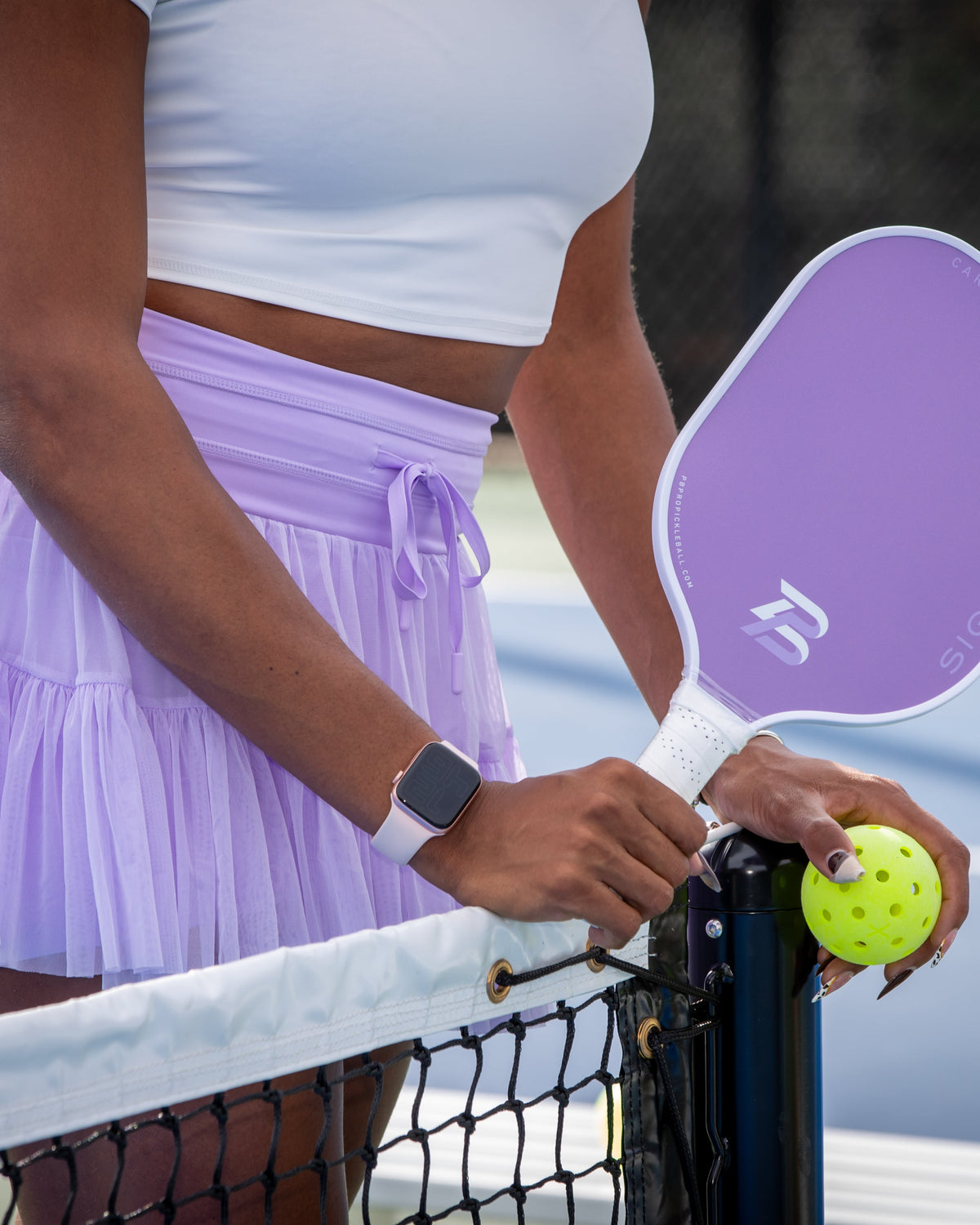
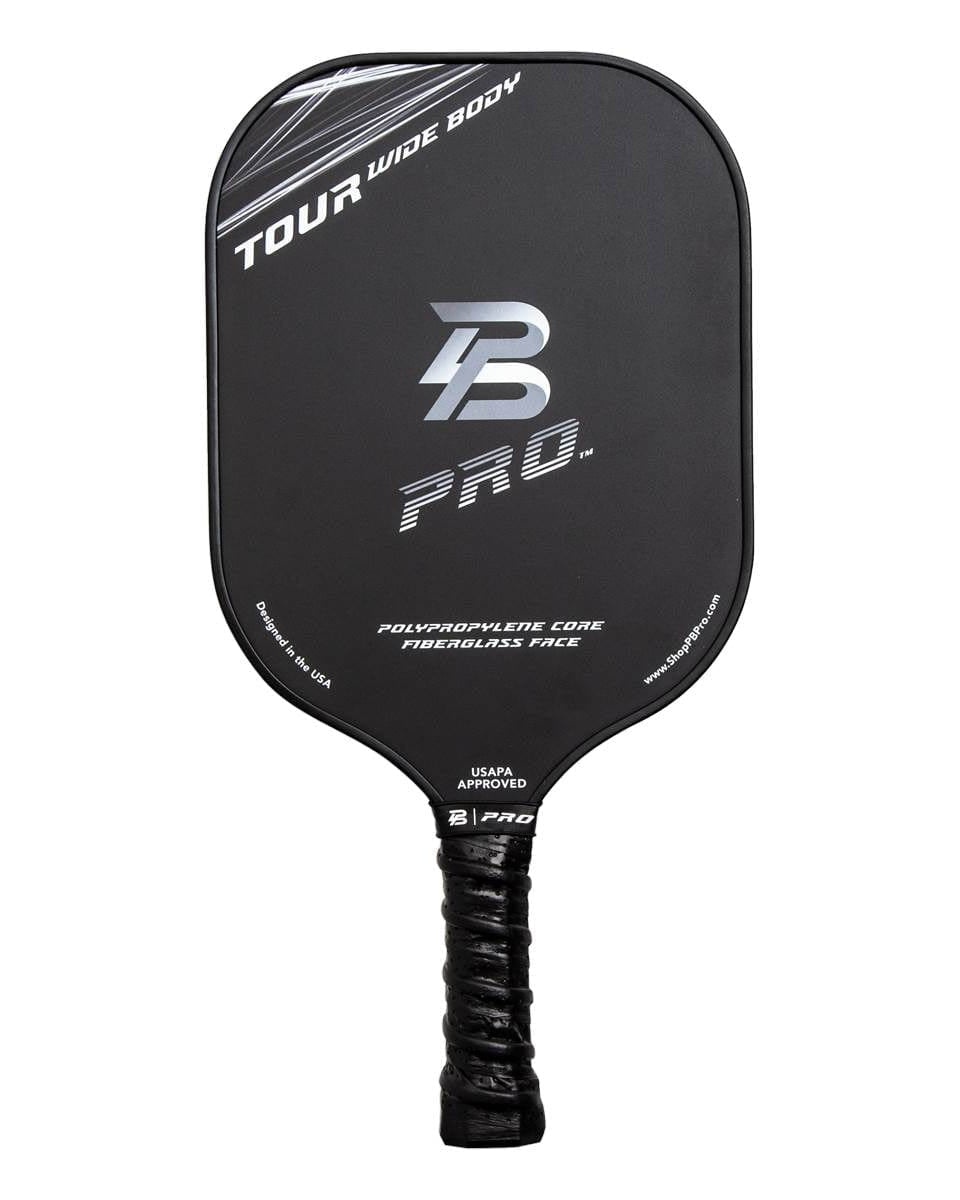
Cold-pressed T700 raw carbon construction, a standard 16-inch profile, and all-court control.
Explore Signature Plus →
PBPRO PADDLE CARE · 2026 GUIDE
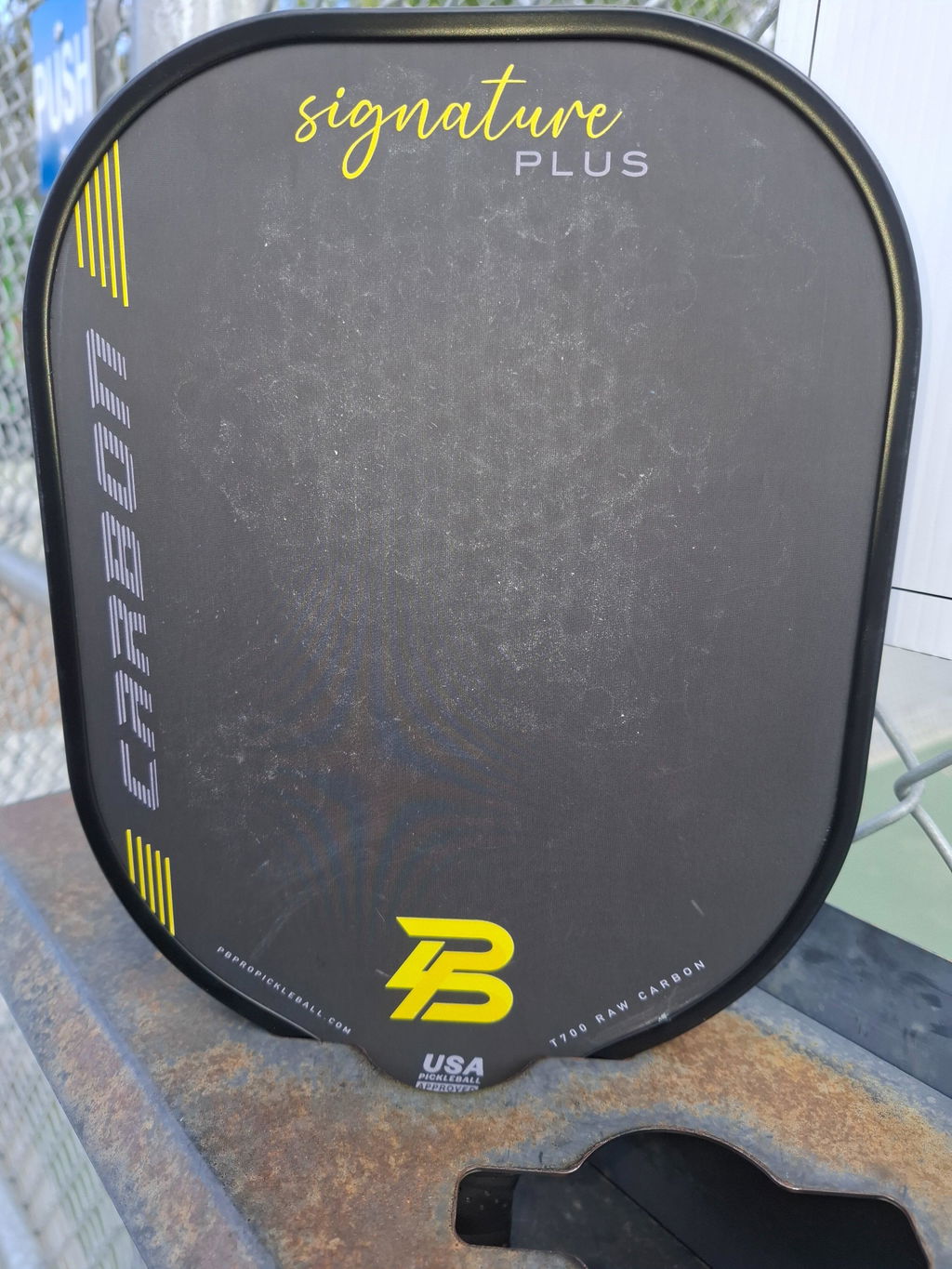
After a few games, even a favorite paddle can collect ball marks, surface residue and court dust. If you play with a raw carbon fiber pickleball paddle, some of that residue can settle into its textured face.
The good news: most everyday buildup is easy to address. You usually don't need a harsh chemical or an expensive cleaning kit—and a dirty-looking paddle does not necessarily need replacing.
01 · THE QUICK METHOD
For regular maintenance, start with the gentlest method. This is appropriate as a general baseline for many paddle surfaces, including PBPRO's carbon fiber models.
02 · KNOW YOUR PADDLE
The right cleaning tool depends on the face finish, not simply whether a paddle uses a honeycomb or foam core.
| Paddle surface | Suggested routine | Cleaning block? |
|---|---|---|
|
Textured raw carbon fiber PBPRO Signature Plus, Falcon Lite |
Microfiber + a little water | Optional only if the cleaner and paddle manufacturer confirm compatibility |
|
Standard carbon / finished carbon face PBPRO Signature 13mm |
Gentle microfiber wipe | Not a default recommendation; avoid on coated or printed finishes without approval |
| Other coated or painted paddle faces | Follow that model's care instructions | Avoid unless explicitly approved |
For example, PBPRO Signature Plus has a T700 raw carbon face, while the Signature 13mm uses regular carbon fiber. Both are carbon fiber paddles, but you shouldn't automatically apply the same specialty cleaning method to both.

03 · OPTIONAL CARE TOOL
Some players use a soft rubber pickleball paddle eraser to lift ball fibers and surface marks from compatible textured raw-carbon faces. These cleaners are optional; a microfiber cloth remains the first choice for everyday care.
Removing stubborn ball residue on a raw-carbon surface only when the paddle and cleaner are confirmed compatible.
On painted, coated, printed or unverified finishes, including Signature 13mm, unless specifically approved for that paddle.
Avoid household Magic Erasers: Melamine foam is abrasive and is not the same as a specialty rubber paddle eraser.
04 · KEEP IT COURT-READY
Edge guards protect the perimeter from ordinary bumps, but deep cracks or loose bonding cannot be fixed by cleaning. Good care helps protect the materials without promising the paddle will never wear.
05 · THE NEXT STEP
Cleaning removes surface debris; it cannot recreate worn texture or repair structural damage. If ball response feels uneven, the face has cracks, or you notice a persistent dead spot, inspect the paddle rather than continuing to scrub it.
If your game has changed, you may also benefit from different paddle specifications. For example:
Cold-pressed T700 raw carbon construction, a standard 16-inch profile, and all-court control.
Explore Signature Plus →
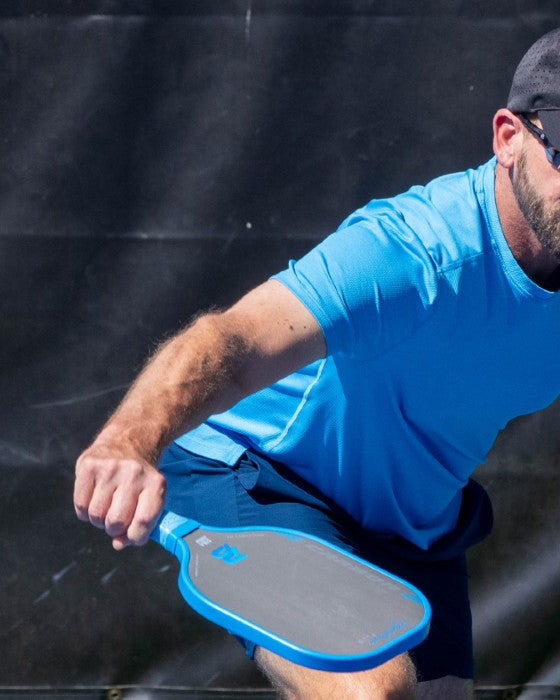
Lightweight elongated shape and 5.5-inch handle for players who want reach and quick handling.
Explore Falcon Lite →Read our guide to paddle lifespan and seven replacement signs, or explore standard vs. elongated paddle shapes.
06 · YOUR QUESTIONS
Wipe away visible dust or residue after play, especially after long or dusty sessions. Specialty cleaning blocks, if compatible, should be used only as needed and according to the product instructions.
Removing ball residue may help recover some spin response if buildup is interfering with the surface. It cannot restore texture that has physically worn away.
We don't recommend ordinary melamine foam Magic Erasers, since they're abrasive and may change a paddle's surface finish. A paddle-specific rubber cleaning block is different, but compatibility still matters.
For routine PBPRO care, start with water and microfiber. Don't use soap, alcohol, solvent cleaners or other chemicals unless the specific paddle manufacturer approves that treatment.
Not necessarily. Cleaning is primarily determined by the outer hitting surface rather than whether the core is honeycomb or full foam. Keep water away from seams and avoid soaking any paddle.
PBPRO Signature 13mm has a standard carbon fiber face, not the same raw-carbon surface specification as Signature Plus. We recommend a gently damp microfiber cloth unless PBPRO confirms a compatible specialty cleaner.
PBPRO · PLAY WITH CONFIDENCE
Thoughtful maintenance can help your equipment stay court-ready. Choose the right care for your surface—and know when your paddle is ready for a new chapter.
Explore PBPRO Paddle Guides →Related PBPRO reading: When to Replace a Paddle and All Paddle Guides.