

How long does a pickleball paddle last? Sometimes months, sometimes years. The answer depends on how often you play, how you care for your paddle—and whether it still delivers the feel, spin and control your game demands.
At PBPRO, we believe good equipment should be built to last. But a paddle's usable life and its peak performance aren't necessarily the same thing. Here's how to decide whether yours needs replacing, whether your game has outgrown it, or whether it's still ready for another season.
01 · Industry benchmarks
How Often Should You Consider Replacing a Paddle?
More time on court means more repeated impacts, but no one can predict a paddle's lifespan from the calendar alone. Consider these practical performance check-in windows:
| Player type | Typical play frequency | When to evaluate performance |
|---|---|---|
| Competitive / Tournament | Daily or 5+ intense sessions per week | About 3–6 months |
| League / Regular | 3–5 sessions per week | About 6–18 months |
| Casual / Recreational | 1–2 sessions per week | About 1–3+ years |
What these estimates mean: They are approximate ranges synthesized from public paddle-manufacturer guidance and equipment-reviewer experience—not controlled, industry-wide lifespan testing. They indicate when it may be worth checking performance, not a date when a paddle automatically expires. Paddletek discusses 6–18 months for frequent players; Selkirk notes that good paddles may last several years; independent reviewers report shorter cycles for very heavy competitive use. Sources: Paddletek, Selkirk, Pickleball Effect.
PBPRO tip: If your paddle still feels consistent and structurally sound, you may have no reason to replace it simply because a certain number of months has passed.
02 · What 'lasting' really means
A Paddle Can Still Work After Its Peak Performance Changes
Structural durability
Is the frame intact? Is the face securely bonded? Are the handle and edge guard sound? A paddle can remain physically usable for years with proper care.
Peak performance
Does it still deliver the familiar rebound, surface grip, ball response and consistency you expect? High-level players may notice subtle changes sooner.
Playing-style fit
Does the paddle still match your technique? As you add topspin, improve resets or develop a two-handed backhand, you may prefer another shape or feel.
Everyday enjoyment
Does it still work well for the way you play? A recreational player doesn't need to replace a paddle just to chase the latest technology.
03 · Seven practical signs
When Should You Replace or Upgrade Your Paddle?
1. The ball no longer responds consistently
Your usual drives, volleys or drops suddenly feel flat, unpredictable or different—even when your technique and the ball are comparable. That can be a reason to investigate wear, though fatigue and playing conditions also affect feel.
2. You notice dead spots or a changed sound
An area of the face may produce a noticeably different rebound or feel. Internal core damage or a bonding problem can sometimes cause this. A tap sound alone isn't a definitive test; persistent inconsistencies deserve attention.
3. Spin has dropped after the face is properly cleaned
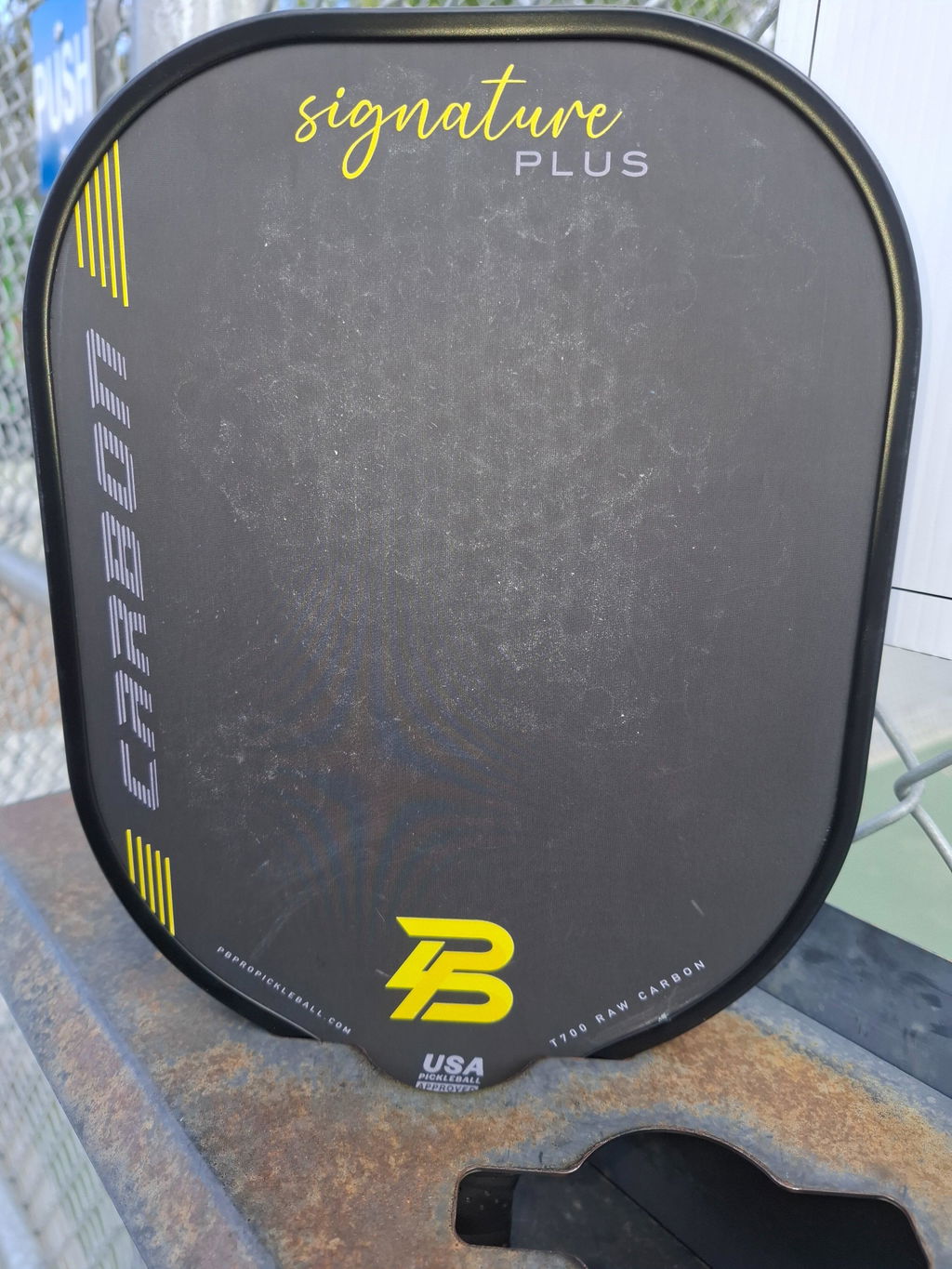
Surface texture and friction can change with repeated play. If familiar topspin shots no longer behave as expected, inspect the surface and compare with a similar paddle. Dirt buildup isn't the same as irreversible wear.
4. There are cracks, face separation or serious edge damage
A minor cosmetic scrape doesn't necessarily require replacement. A cracked face, warped shape, separating layers or serious structural damage is different. Stop using a clearly damaged paddle and contact the manufacturer about your options.
5. The handle feels loose or the paddle rattles
Unusual movement, rattling or a suddenly unstable feel may indicate a loose component or internal damage. A worn overgrip alone is typically a simple maintenance issue—not a reason to replace the entire paddle.
6. Your skills have progressed
As players improve, they may want more control for resets, a different surface feel for topspin, or greater stability during fast exchanges. This is an upgrade decision, not evidence that the old paddle failed.
7. Your playing style has changed
Maybe you're transitioning from recreational doubles to tournament play, adding a two-handed backhand or looking for more reach. A longer handle or a different weight balance might fit your new game better, even if your current paddle is in excellent condition.
Related reading: Elongated vs. Standard Paddles · Control vs. Power
04 · Before you buy another
A Simple Five-Minute Paddle Check
- Clean it gently. Remove ordinary dust and ball residue with a soft microfiber cloth, following the maker's care instructions.
- Inspect the surface and edge. Look for cracks, separation, warping or a loose handle—not just cosmetic scuffs.
- Hit familiar shots. Try several serves, drives, dinks and resets with comparable balls and conditions.
- Compare if possible. Try a newer paddle with similar specifications. Notice consistent differences in rebound, spin and control.
- Ask what changed. Is the paddle worn, or have your preferences and level developed?
This is an informal playing check, not a laboratory test. When physical integrity is in doubt, ask the manufacturer to assess the paddle.
05 · Better care, longer play
How to Help Your Paddle Last Longer
Keep it out of extreme heat
Avoid leaving paddles in hot vehicles or freezing conditions, which can affect materials and bonding.
Protect the face and edges
Use a paddle cover or padded bag, and avoid striking the court, fence or other hard objects.
Use gentle cleaning
Wipe away debris with a microfiber cloth. Avoid abrasive cleaners or aggressive scrubbing unless approved for your specific surface.
Refresh your grip
A worn grip may change how secure the paddle feels. Replacing an overgrip can restore comfort without replacing the paddle.
Equipment care helps protect your investment, though normal face and core wear from repeated play cannot be prevented entirely. Manufacturer care guidance.
06 · If your game has evolved
Choosing Your Next PBPRO Paddle
If your current paddle has a structural problem, replacing it may be necessary. If it still works but your game has improved, consider these different performance directions:

INTERMEDIATE · CONTROL
PBPRO Signature Plus 16mm
Cold-pressed 16mm polypropylene core with T700 raw carbon face. A balanced step up for players developing consistency, placement and spin.
$54.99
Explore Signature Plus →
LONGER REACH · LIGHTWEIGHT
PBPRO Infinity Falcon Lite
An elongated 16.5-inch design with a 5.5-inch handle and approximately 7.8-ounce weight. Suits players looking for reach and quick handling.
$89
Explore Falcon Lite →Not sure what fits? Read our complete paddle selection guide or intermediate paddle recommendations.
07 · Quick answers
Frequently Asked Questions
Do pickleball paddles need replacing every six months?
No. Some frequent or competitive players prefer to evaluate performance within months, while others play happily with one paddle for years. Condition and expectations matter more than age.
Can you fix a dead spot?
A true internal core defect generally isn't something routine cleaning will restore. If you suspect structural damage, contact the manufacturer instead of trying a home repair.
Does a smoother paddle face mean it's worn out?
Not always. Some grime can be cleaned, and different paddle faces feel different when new. Evaluate meaningful changes in play rather than relying only on appearance or touch.
Should I replace my paddle as I improve?
Only if another shape, handle length, weight or playing feel would better support your developing skills. The best reason to upgrade is a genuine fit for your game.
PLAY LONGER. PLAY SMARTER.
Replace when it matters—not because the calendar says so.
PBPRO is built around performance, thoughtful design and lasting value. Find a paddle that fits the way you play today—and the way you're growing.
Explore All PBPRO Paddle Guides →