
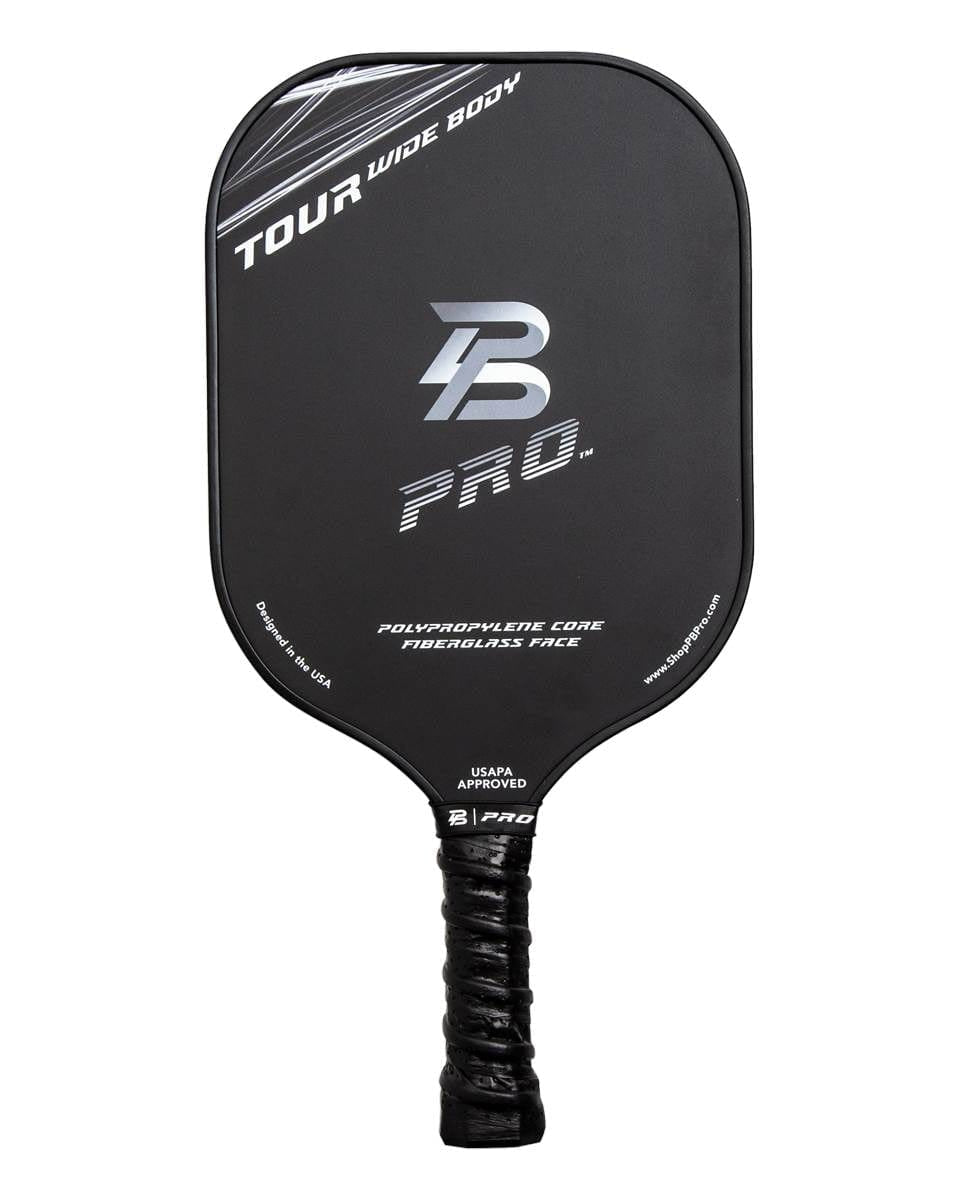

Current PBPRO paddle lineup
- Signature Plus — $54.99: Cold-pressed construction with a 16mm polypropylene core and T700 raw carbon face.
- Gen-X4 — $129, reduced from $199: Limited black/pink inventory remains, available while supplies last.
- Gen-X5 — $199: Full foam core, improved carbon frame and T700 raw carbon face. USA Pickleball approved. Currently in production; coming soon.
Should you choose a 13mm or 16mm pickleball paddle? The short answer is that a 13mm core usually feels quicker and more direct, while a 16mm core generally offers more stability, dwell time, and control. But thickness does not work alone—surface material, shape, weight, balance, and construction also affect how a paddle performs.
This guide compares the two most common paddle thicknesses and helps you choose based on your experience, playing style, and preferred feel.
Table of Contents
13mm vs. 16mm: The Quick Answer
Choose a 13mm paddle if you prefer a faster, more responsive feel, easy maneuverability, and a balanced blend of power and control. This thickness can be especially approachable for beginners and recreational players who want a paddle that moves easily through the air.
Choose a 16mm paddle if you prioritize stability, a softer response, control on resets and dinks, and a more planted feel at contact. It is a popular choice for improving, intermediate, and advanced players, although players at any level can enjoy it.
Neither thickness is automatically better. The right choice is the one that supports how you swing and the shots you want to improve.
13mm vs. 16mm Pickleball Paddle Comparison Chart
| Feature | 13mm Paddle | 16mm Paddle |
|---|---|---|
| Typical feel | Direct and responsive | Softer and more controlled |
| Hand speed | Often quicker | Can feel more substantial |
| Power response | Livelier response | More controlled response |
| Stability | Balanced; varies by construction | Typically more stable |
| Soft game | Responsive but requires touch | More dwell time for resets and dinks |
| Common fit | Beginners, recreational players, quick-hand players | Improving, control-focused, intermediate and advanced players |
These are general tendencies. Paddle weight, balance, shape, face material, core material, and manufacturing method can change the final feel.


What Does Pickleball Paddle Thickness Mean?
Paddle thickness is the depth of the paddle core, measured in millimeters. The core sits between the two paddle faces and influences how the ball feels when it contacts the paddle.
A thinner core generally compresses less and can return energy more quickly, creating a firmer or livelier response. A thicker core can create more dwell time—the brief sensation that the ball stays on the paddle face—which may help with control and touch.
Thickness is only one part of the design. For example, a 16mm thermoformed paddle may still produce substantial power, while a well-designed 13mm carbon fiber paddle can provide excellent control. That is why it is better to compare complete paddle designs instead of choosing from the millimeter number alone.
How Does a 13mm Pickleball Paddle Play?
A 13mm paddle often feels crisp, responsive, and quick in the hands. The slimmer profile can be easier to maneuver during fast exchanges at the kitchen line and may help players accelerate the paddle without feeling slowed down.
Potential advantages of a 13mm core
- Quick maneuverability for volleys and hand battles
- Direct feedback at ball contact
- A lively response for drives and serves
- A balanced feel that can work well for new and recreational players
Potential tradeoffs
- Less natural dampening than many thicker paddles
- Soft shots may require a little more touch
- Off-center contact may feel less stable depending on the paddle design
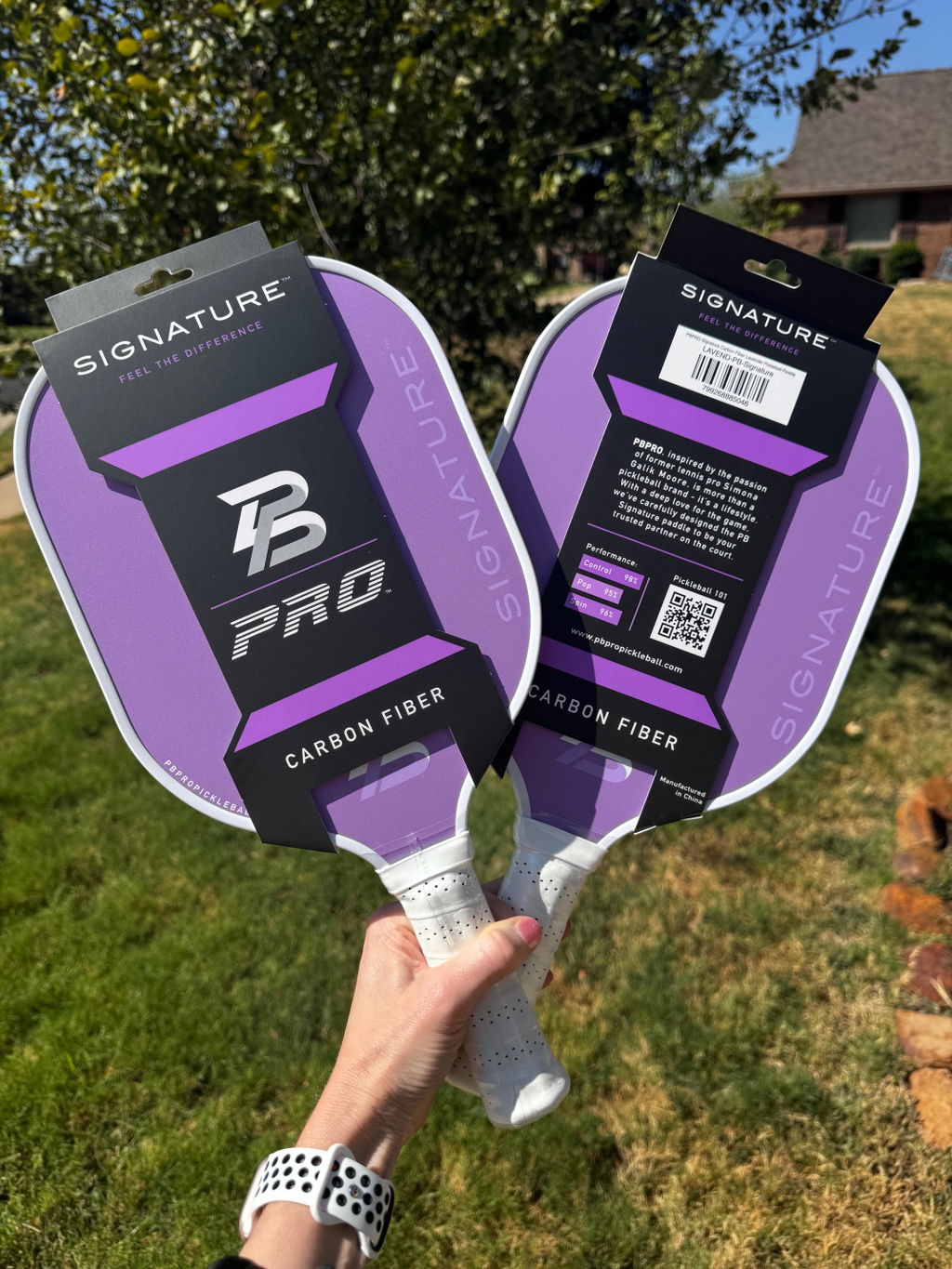
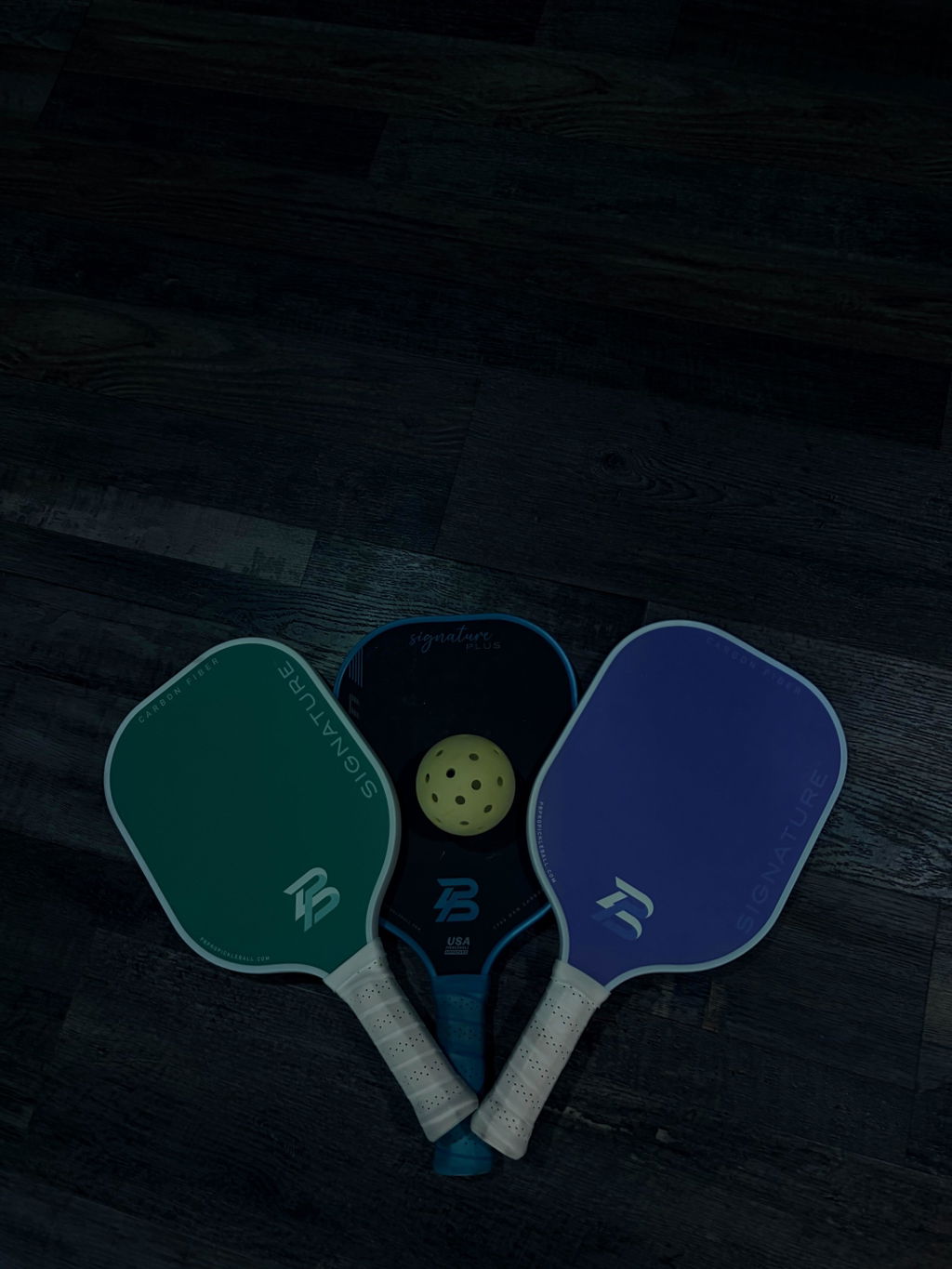
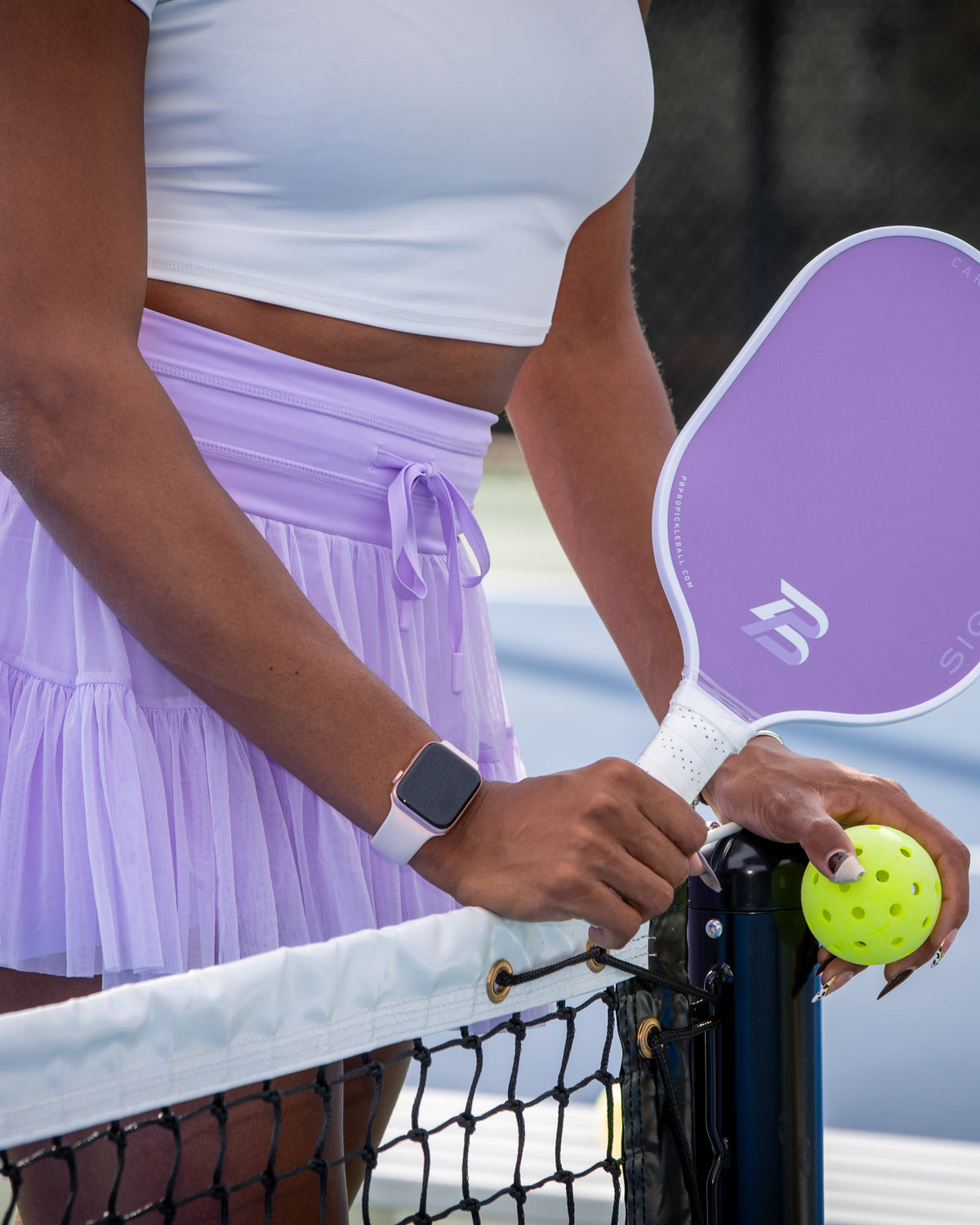
The 13mm PB Signature collection uses a carbon fiber face and polypropylene core to provide accessible, balanced performance for beginners and recreational players.
How Does a 16mm Pickleball Paddle Play?
A 16mm paddle generally feels more substantial and controlled. The thicker core can improve stability and soften the response on blocks, resets, and dinks. Many players like the confidence this creates when defending hard shots or placing the ball precisely.
Potential advantages of a 16mm core
- Greater stability and a more planted feel
- More control for dinks, drops, resets, and blocks
- A softer response that can be comfortable during extended play
- A strong platform for raw carbon spin-oriented designs
Potential tradeoffs
- May feel slower than a thinner paddle, depending on swing weight
- Players who want a very crisp response may prefer a thinner core
- Thickness alone does not guarantee control or eliminate vibration
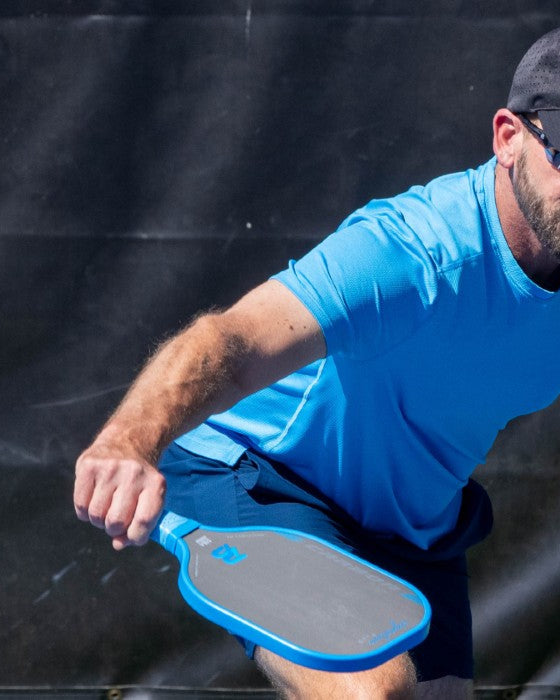
The 16mm PB Signature Plus collection adds a T700 raw carbon face for players who want more spin potential, stability, and control as their game develops.
Which Paddle Thickness Fits Your Game?
Beginners and recreational players
A balanced 13mm paddle can be an excellent starting point because it feels responsive and easy to move. New players can learn the basic mechanics of serves, returns, volleys, and dinks without the paddle feeling bulky. Players who prefer a softer or more stable feel can also start with a 16mm paddle; there is no rule that beginners must use 13mm.
Control-focused players
If your priorities are third-shot drops, resets, blocks, and patient kitchen play, a 16mm paddle is often the better starting point. The thicker core generally provides a more controlled response under pressure.
Power-focused players
A 13mm paddle can provide a firmer and livelier response. However, advanced 16mm construction—especially thermoforming, perimeter reinforcement, or foam-enhanced designs—can also create significant power. Consider the entire paddle, not thickness alone.
Players who value hand speed
Look beyond thickness and check overall weight and swing weight. A lightweight elongated 16mm paddle may move faster than a poorly balanced 13mm paddle. The 16mm Infinity Falcon Lite, for example, is designed around lightweight speed and reach.
Former tennis players
Former tennis players often appreciate a 16mm elongated paddle because it can combine reach, stability, spin potential, and room for a two-handed backhand. Players with fast racket-head speed may also enjoy the direct response of a 13mm core. Read our paddle guide for former tennis players for a more specific comparison.
PBPRO 13mm and 16mm Paddle Comparison
| PBPRO Paddle | Core | Surface | Best For | Explore |
|---|---|---|---|---|
| PB Signature | 13mm | Carbon fiber | Beginners and recreational players seeking balanced, responsive performance | View collection |
| PB Signature Plus | 16mm | T700 raw carbon | Improving and intermediate players prioritizing control, spin and stability | View collection |
| Infinity Falcon Lite | 16mm | T700 raw carbon | Players wanting lightweight speed, reach and a longer handle | View paddle |
| Infinity Gen-X5 | 16mm | T700 raw carbon | Competitive all-court players seeking stability, reach, spin and power | View paddle |
Still deciding?
See specifications, playing-level recommendations, and PBPRO paddle families side by side.
Other Factors Matter as Much as Thickness
- Weight and swing weight: These affect maneuverability, stability, power, and fatigue. Read how paddle weight impacts your game.
- Surface material: Fiberglass, carbon fiber, and raw carbon surfaces can produce different feedback and spin potential. Compare carbon fiber and fiberglass paddles.
- Shape and handle length: Widebody paddles emphasize forgiveness, while elongated paddles offer reach and may accommodate two-handed backhands.
- Grip size: A comfortable grip can improve control and reduce unnecessary tension. See our pickleball grip-size guide.
- Balance: Two paddles with the same static weight can feel very different if one carries more weight toward the head.
Frequently Asked Questions
Is a 13mm or 16mm pickleball paddle better?
Neither is universally better. A 13mm paddle usually feels quicker and more responsive, while a 16mm paddle generally emphasizes stability and control. Choose according to your swing, preferred feel, and playing style.
Which paddle thickness is best for beginners?
Many beginners enjoy a balanced 13mm paddle because it is responsive and easy to maneuver. A forgiving 16mm paddle is also appropriate for beginners who prefer a softer, more stable feel.
Does a 16mm paddle have less power?
Not necessarily. Core thickness influences response, but materials and construction also determine power. Some thermoformed or foam-enhanced 16mm paddles are designed to generate substantial power while maintaining stability.
Does a thicker paddle reduce vibration?
A thicker core can feel softer and more dampened, but vibration also depends on construction, edge reinforcement, handle design, grip, and where the ball contacts the face.
Is 13mm good for doubles?
Yes. The quick, responsive feel of many 13mm paddles can work well in fast doubles exchanges. Players who rely heavily on resets and defensive blocks may prefer the stability of a 16mm paddle.
Is 16mm good for singles?
Yes. A 16mm paddle can provide control and stability for singles, and an elongated shape can add reach. Players should also consider swing weight because singles requires coverage and repeated acceleration.
Final Recommendation
Choose 13mm when you want a fast, direct, balanced response. Choose 16mm when you want a more stable, controlled, and cushioned feel. Then refine your decision using weight, balance, shape, surface, and handle length.
If you want an easy starting point, explore the 13mm PB Signature for balanced recreational performance or the 16mm PB Signature Plus for T700 raw carbon control and spin. Advanced players can compare the full PBPRO Infinity collection.
Browse More PBPRO Paddle Guides →
PBPRO paddle guidance is informed by founder Simona Moore’s experience as a former professional tennis player and equipment developer.
Ready to Choose Your Core Thickness?
- Choose 13mm for quicker handling and accessible power: shop PB Signature.
- Choose 16mm for added control, stability, and a softer feel: shop Signature Plus Black.