Expert guidance from Simona Moore, former professional tennis player and founder of PBPRO.
Some pickleball paddles help you slow the ball down, place shots accurately, and control rallies. Others make it easier to create speed and finish points. Most players need a balance of both.
This guide explains the difference between control and power paddles—and helps you choose the right PBPRO paddle for your game.
Table of Contents
- Quick Answer
- Control vs. Power at a Glance
- Which Paddle Fits Your Game?
- Features That Affect Control and Power
- Best PBPRO Paddles for Control and Power
- Frequently Asked Questions
- Final Recommendation
Quick Answer: Do You Need Control or Power?
- Choose control if you already generate pace but need help with dinks, drops, resets, placement, and consistency.
- Choose power if you have a compact or slower swing and want more speed on serves, drives, overheads, and put-away shots.
- Choose balanced performance if you are still developing your style or want one paddle for every area of the court.
FIND YOUR BALANCE
Control vs. Power Paddles at a Glance
| Feature | Control Paddle | Power Paddle |
|---|---|---|
| Primary benefit | Placement, touch, and consistency | Speed, depth, and finishing ability |
| Typical feel | Softer and more predictable | Firmer and more responsive |
| Best shots | Dinks, drops, resets, and blocks | Serves, drives, overheads, and put-aways |
| Best for | Players who naturally create pace | Players who want help creating pace |
| Common challenge | May require more effort for speed | Can be harder to control in the soft game |
These are general tendencies. Core thickness, shape, weight, balance, surface material, and your swing all influence how a paddle performs.
Which Paddle Fits Your Game?
You are a natural power player
You swing quickly and already create plenty of pace, but you sometimes hit long or pop up soft shots. A control-oriented paddle can help you manage speed and improve drops, resets, and placement.
You are a control player
You rely on patience, consistency, and point construction but struggle to finish high balls. A balanced or power-oriented paddle can add speed without requiring a harder swing.
You are an all-court player
You want to dink, reset, drive, counter, and finish with the same paddle. Look for a balanced design with predictable control, accessible power, spin, and stability.
You are still developing your style
Choose a forgiving, balanced paddle. As your technique improves, you will better understand whether you need more control, power, reach, spin, or hand speed.
Features That Affect Control and Power
Core thickness
A 13mm paddle generally feels quicker and more direct, making it a versatile option for players seeking maneuverability and accessible power. A 16mm paddle generally feels softer and more stable, which can support dinks, resets, blocks, and placement.
Compare 13mm vs. 16mm Pickleball Paddles →
Paddle shape
A standard or widebody shape usually offers a larger, more forgiving hitting area. An elongated paddle provides additional reach and leverage, which can help with drives, serves, and two-handed backhands.
Surface material
Carbon fiber is often chosen for its connected feel, control, and spin potential. However, the complete construction—not the surface alone—determines whether a paddle feels powerful or control-oriented.
Compare Carbon Fiber and Fiberglass Paddles →
Weight and balance
Additional weight can improve stability and power, but too much may reduce hand speed or increase fatigue. Weight distribution matters as much as the number on the scale.
Learn How Paddle Weight Affects Your Game →
Best PBPRO Paddles for Control and Power


| Paddle | Best For | Performance | Explore |
|---|---|---|---|
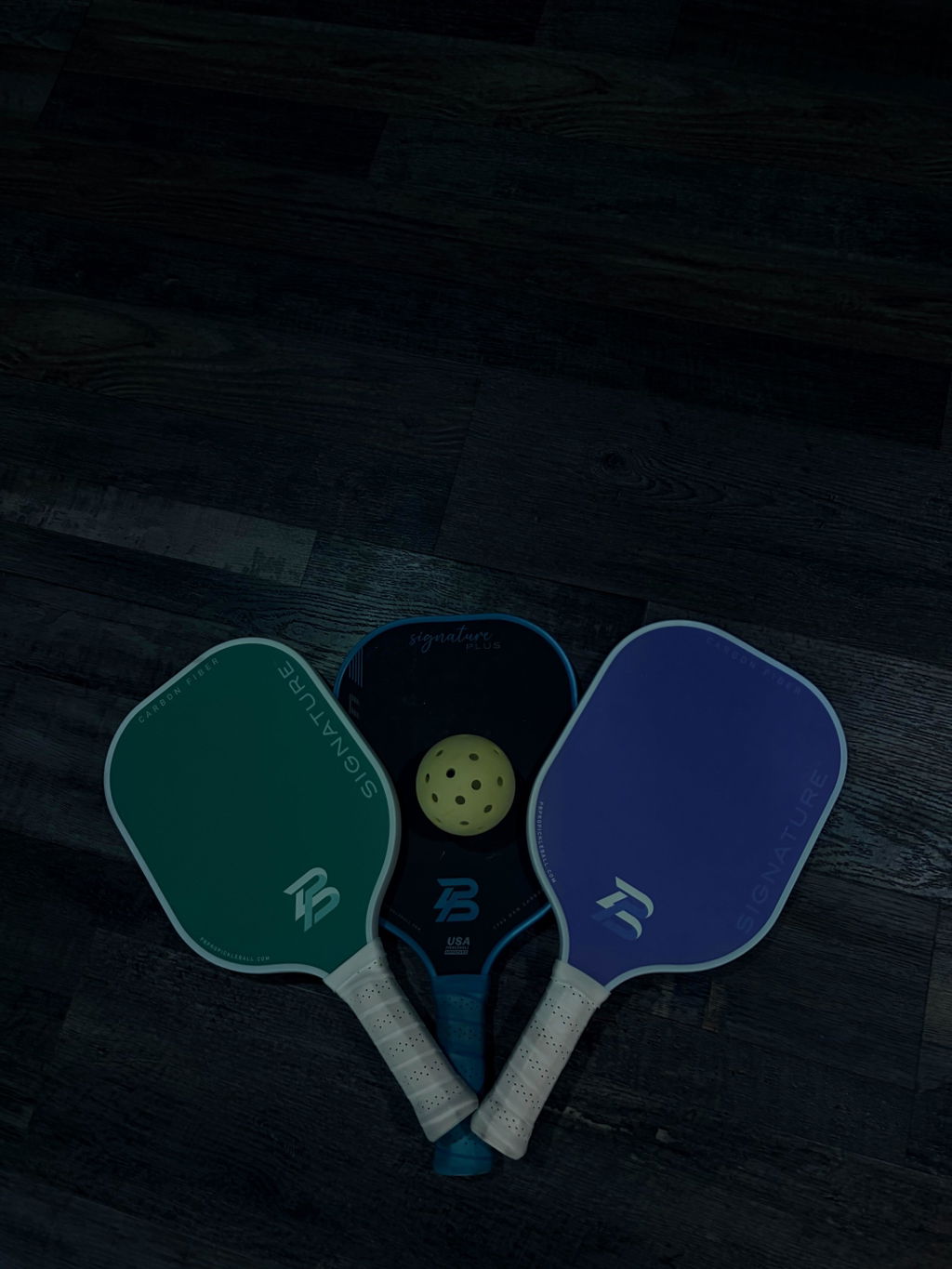
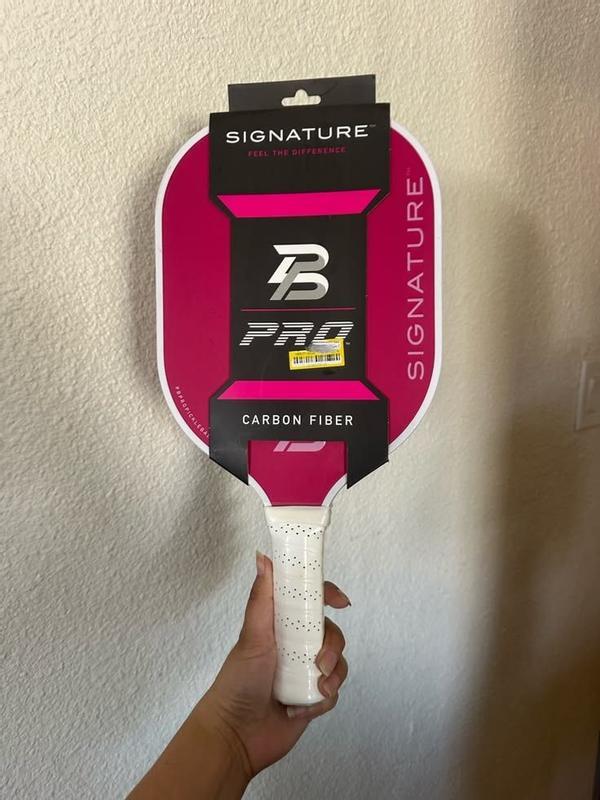
| PBPRO Signature 13mm | Beginners and recreational players | Balanced control and power with a forgiving shape | Shop |
| PBPRO Signature Plus 16mm | Improving players and natural power hitters | More control, spin, stability, and touch | Shop |
| Infinity Falcon Lite | Aggressive players and former tennis players | Controlled power, added reach, and a longer handle | View |
| PBPRO Infinity | Advanced and competitive players | Premium power, spin, stability, and performance | Shop |
Quick Recommendation
- Choose Signature for affordable, balanced performance.
- Choose Signature Plus if control and soft-game consistency are your priorities.
- Choose Falcon Lite if you want reach and controlled power.
- Choose Infinity for advanced, aggressive performance.
Frequently Asked Questions
Is a control or power paddle better for beginners?
Most beginners should start with a balanced paddle. A forgiving shape, manageable weight, and predictable response make it easier to develop proper technique.
Is a 16mm paddle always a control paddle?
No. A 16mm core generally supports a softer feel and greater stability, but shape, weight, balance, surface, and internal construction also affect performance.
How do I know if my paddle is too powerful?
Your paddle may be too powerful if you consistently hit routine shots long, pop up resets, or feel that small swings create unpredictable results.
What should a former tennis player choose?
Many former tennis players already create significant power. They often benefit from added control, spin, stability, and enough handle length for familiar swing mechanics or a two-handed backhand.
See Our Guide for Former Tennis Players →
Final Recommendation
Do not choose a paddle simply because it is labeled “control” or “power.” Start by evaluating your natural swing and the shots you want to improve.
Choose the PBPRO Signature 13mm for balanced, forgiving performance. Choose the Signature Plus 16mm for additional control, spin, and touch. Choose the Falcon Lite for controlled power and reach, or explore the Infinity collection for advanced performance.
The best paddle is the one that strengthens your game without making your weaknesses harder to manage.